
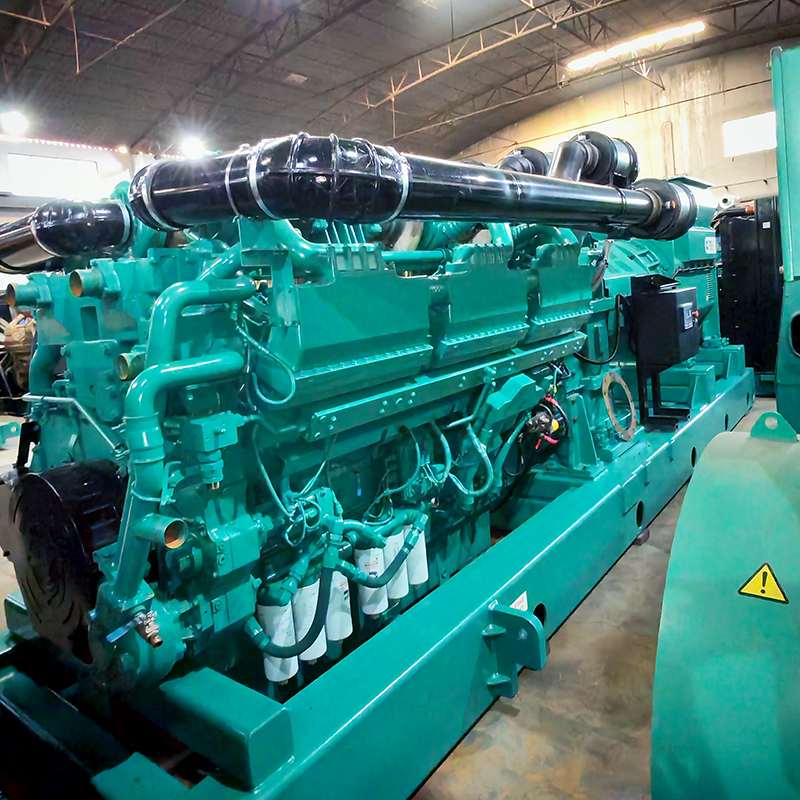
Power outages can disrupt operations, damage equipment, and cause significant financial losses. Whether for industrial facilities, commercial buildings, or infrastructure projects, choosing the right backup power solution is critical.
With options like diesel, gas, and solar available, why do many businesses still choose diesel generators for backup power?
Let’s compare.
What Is a Diesel Backup Generator?
A diesel generator is a power system that converts diesel fuel into electricity using a compression-ignition engine and alternator. Leading global engine manufacturers such as Cummins and Perkins have made diesel gensets the benchmark for industrial-grade reliability.
Diesel generators are commonly used for:
-
Industrial facilities
-
Hospitals
-
Data centers
-
Construction sites
-
Commercial buildings
They are especially trusted in environments where uninterrupted power is mission-critical.
Diesel vs. Gas Generators
1️⃣ Reliability Under Heavy Loads
Diesel generators handle high surge currents better than gas generators. Industrial equipment, motors, and compressors often require strong starting power — diesel systems manage these loads more effectively.
2️⃣ Fuel Efficiency
Diesel engines are generally more fuel-efficient under continuous or heavy load operation. This makes them more cost-effective for extended outages.
3️⃣ Durability and Lifespan
Diesel engines are built with stronger internal components to withstand high compression ratios. As a result, they typically have longer service lives compared to gas generators.
4️⃣ Fuel Storage Safety
Diesel fuel is less flammable than gasoline, making it safer to store on-site for emergency backup applications.
When gas may be preferred:
Gas generators can be quieter and cleaner in emissions, especially where natural gas infrastructure is already available.
Diesel vs. Solar Backup Systems
Solar energy is growing rapidly, but when it comes to reliable emergency backup, there are important differences.
1️⃣ Immediate Power Availability
Diesel generators provide instant power when the grid fails. Solar systems depend on sunlight and typically require large battery storage systems to supply power at night or during cloudy conditions.
2️⃣ High Power Output
Industrial facilities often require hundreds or thousands of kVA. Diesel generators can deliver large-scale output consistently, while solar systems need significant space and investment to match that capacity.
3️⃣ Lower Initial Investment for High Capacity
For high-load industrial backup, diesel generators usually require lower upfront capital compared to large-scale solar-plus-battery systems.
4️⃣ Weather Independence
Diesel generators operate regardless of weather conditions. Solar output fluctuates based on sunlight availability.
When solar may be preferred:
Solar systems are ideal for reducing long-term energy costs and carbon footprint, especially in hybrid systems combined with diesel.
Why Diesel Remains the Industrial Standard for Backup Power
Despite advances in alternative energy, diesel generators remain dominant in industrial backup applications because they offer:
-
High starting torque for heavy equipment
-
Stable voltage and frequency output
-
Fast automatic start with ATS systems
-
Proven technology with global service networks
-
Long operational lifespan
For mission-critical operations — such as hospitals, manufacturing plants, and data centers — downtime is not an option. Diesel generators provide predictable, controllable, and scalable backup power.
Can Diesel and Solar Work Together?
Yes. Many modern facilities use hybrid systems that combine solar panels with diesel generators. Solar reduces fuel consumption during normal operation, while diesel ensures reliability during peak loads or nighttime outages.
This approach balances sustainability with operational security.
Final Thoughts
When comparing diesel, gas, and solar backup systems, the best choice depends on your power demand, budget, and reliability requirements.
For high-capacity, heavy-duty, and mission-critical backup applications, diesel generators continue to offer unmatched reliability, durability, and performance. While solar and gas solutions have their advantages, diesel remains the most dependable choice when continuous power truly matters.
If you're selecting a backup power solution for industrial or commercial use, evaluating load requirements, runtime expectations, and infrastructure conditions will help determine the most cost-effective option.


